National and State Registers of Historic Places
Results of Query:
County: Leavenworth
Records: All Properties
Page 2 of 6 showing 10 records of 51 total,
starting on record 111 | 2 | 3 | 4 | 5 | 6
Caenen Site 14LV1083
 Address Restricted
Tongonoxie (Leavenworth County)
Listed in National Register Sep 6, 2005
Architect: Not listed
Area of Significance: archaeological site
Thematic Nomination: Prehistoric Sites of Stranger Creek Basin, Leavenworth County
Carroll, Edward, House
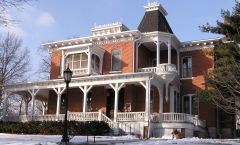 1128 5th Ave
Leavenworth (Leavenworth County)
Listed in National Register Oct 2, 1986
Architect: Not listed
Area of Significance: single dwelling
Architectural Style(s): Italianate
Delaware Cemetery
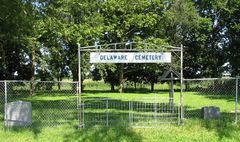 10388 222nd St.
Linwood (Leavenworth County)
Listed in National Register Feb 3, 2020
Architect: Not listed
Area of Significance: cemetery
The Delaware Cemetery is located in Leavenworth County, Kansas. It was first established as the Zeigler Family Burying Ground with the first known burial being of Delaware Betsy Zeigler on October 1867. However, there may have been earlier, undocumented burials as early as 1860, when some of the Delaware, including the Zeiglers, were relocated to Leavenworth County.
Evans Site, 14LV1079
Address RestrictedTonganoxie Vicinity (Leavenworth County)
Listed in National Register Oct 28, 2004
Architect: Not listed
Area of Significance: archaeological site
Thematic Nomination: Prehistoric Sites of Stranger Creek Basin, Leavenworth County
First Presbyterian Church, Leavenworth
 407 Walnut St
Leavenworth (Leavenworth County)
Listed in National Register Jan 11, 2006
Architect: William Pratt Feth
Area of Significance: religious facility
Architectural Style(s): Classical Revival
Leavenworth's First Presbyterian Church was designed by local architect William Pratt Feth and was built between 1907 and 1909. The Classical Revival-style brick church features an Ionic portic, stone terra cotta trim, and a two-story education wing added in about 1935. In addition to its architecture, the building was nominated for its exceptional stained glass windows - one of which was created by Tiffany Studios.
Fort Leavenworth
 Fort Leavenworth
Leavenworth
Fort Leavenworth
LeavenworthFort Leavenworth (Leavenworth County)
Listed in National Register Oct 15, 1966
National Historic Landmark, 12/19/1960
Architect: Not listed
Area of Significance: fortification
Architectural Style(s): Other
Fort Leavenworth is the oldest US army fort in continuous existence west of the Mississippi River. Established in 1827 as a frontier post to protect trade on the Santa Fe Trail, it also became essential to overland expansion along the Oregon-California Trail. In 1834 the fort became headquarters for the US Dragoons, the army's first permanent mounted regiment. During the Mexican War, the Army of the West left from Fort Leavenworth. When Kansas achieved territorial status in 1854, Governor Andrew Reeder first had his office at the fort. During the Civil War, the fort was a critical western linchpin for the Union, serving as an arsenal and training point. After the Civil War, Colonel Benjamin Grierson formed the black 10th Cavalry Regiment that distinguished itself throughout the frontier. Fort Leavenworth is the home of the US Army Command and General Staff College, the highest ranked school in the army educational system. Also on the fort are the "Rookery" (c. 1830), which is the oldest continuously occupied residence in Kansas; the Post Chapel (1872); the Fort Leavenworth National Cemetery; and the Buffalo Soldier Monument honoring the 9th and 10th U.S. Cavalry regiments.
Fort Leavenworth National Cemetery
 Within Fort Leavenworth military reservation
Fort Leavenworth (Leavenworth County)
Listed in National Register Jul 15, 1999
Architect: Not listed
Area of Significance: cemetery
Architectural Style(s): Second Empire
Thematic Nomination: Civil War Era National Cemeteries
- National Register Nomination
- Inventory Record - Cemetery Entrance Gate
- Inventory Record - Fort Leavenworth National Cemetery
Giles, Leanna, House
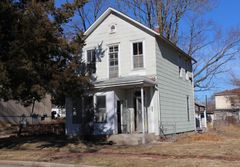 202 Pottawatomie St.
Leavenworth (Leavenworth County)
Listed in State Register Feb 4, 2017
Architect: Unknown
Area of Significance: single dwelling
Architectural Style(s): Vernacular
Built in circa 1860, the Giles House is nominated for its association with Leavenworth’s residential development. Once a common house type, especially for working class families, this house is one of the few remaining examples of pre-statehood National Folk houses in Leavenworth. The house is named for Leanna Giles, who was the longest tenant-owner in the house’s history.
Greenwood Cemetery
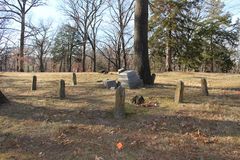 Tonganoxie Rd & Limit St
Leavenworth (Leavenworth County)
Listed in National Register May 13, 2022
Architect: Not listed
Area of Significance: cemetery
Architectural Style(s): Other
Greenwood Cemetery is important for its association with Kansas and local history beginning in the territorial period and the first century of history in Kansas. In proximity to the oldest fort west of the Mississippi, Fort Leavenworth, much activity occurred in Leavenworth County, where major trails traversed the land, accommodating westward expansion as well as the settlement of Leavenworth. The impetus for the founding of Greenwood Cemetery is the first non-sectarian cemetery in the vicinity, Pilot Knob/Mount Aurora, was becoming increasingly difficult to access. Greenwood was founded in 1863 with the purchase of 12 acres of rural farmland by Mrs. Mary A. Davis, wife of Dr. James Davis, local physician. It is a good example of the rural or garden cemetery design, popular in the United States and Europe in the mid-nineteenth century. Now considered abandoned, it is important to preserve the cemetery due to its connection to early Leavenworth history.
Harris, Senator William A., House
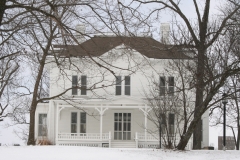 .25 mile W of Linwood on K32
Linwood (Leavenworth County)
Listed in National Register Nov 5, 1974
Architect: Not listed
Area of Significance: single dwelling
Architectural Style(s): Stick/Eastlake
1 | 2 | 3 | 4 | 5 | 6

